How Performance Marketing Transforms Digital Growth
For years, I watched small businesses throw money at online ads with little to show for it. The problem was never the budget, it was the lack of a real system. They would run a Facebook Ad campaign, get a few clicks, and call it a day. But clicks don't pay the bills. What pays the bills is understanding exactly how each dollar moves through your funnel and knowing which levers actually drive revenue. That is where performance marketing comes in.
Performance marketing is not just a fancy label for online advertising. It is a data-driven discipline where every action is measured against a specific outcome. Instead of paying for impressions or vague brand awareness, you pay only when someone takes a meaningful action, a click, a lead, a sale. This mindset forces you to build campaigns that are accountable from the start. And when done right, it turns marketing from a cost center into a profit engine.
Let me walk you through the core principles and practical tactics that make performance marketing work, based on real campaigns I have managed and observed.
Stop Guessing and Start Measuring
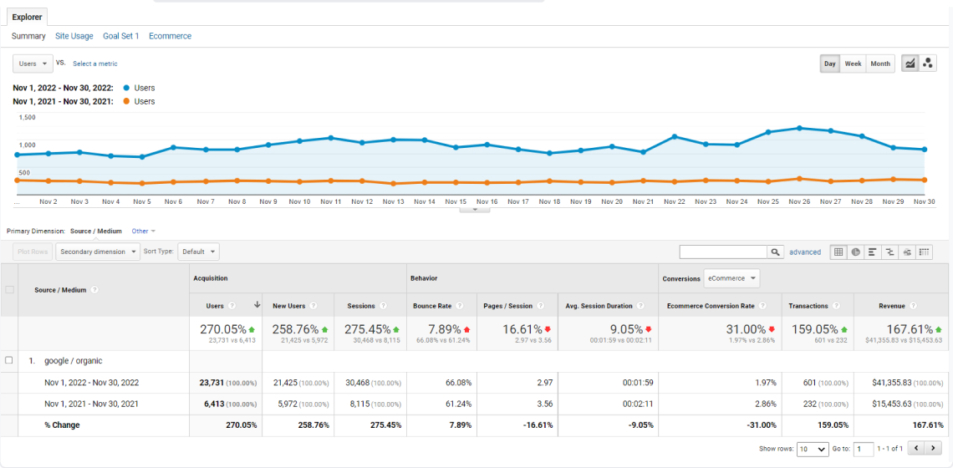
The first step in any performance marketing strategy is setting up proper tracking. Without accurate data, you are flying blind. I always start with Google Analytics because it gives you a clear picture of where your traffic comes from and what visitors do once they land on your site. But raw traffic numbers are misleading. You need to dig deeper into conversion rate optimization to understand why some pages turn visitors into customers while others fall flat.
For example, I worked with an e-commerce brand that was spending heavily on Google Ads but seeing a cost per acquisition that ate up their margins. By analyzing their funnel analysis in Google Analytics, we found that most users dropped off at the checkout page. The issue was a clunky form and a slow load time. After A/B testing a simpler checkout flow, their conversion rate jumped by 34%, and their return on ad spend improved dramatically. That is the kind of insight you only get when you measure the right things.

The Power of Audience Segmentation
One of the biggest mistakes I see is treating all visitors the same. Audience segmentation changes that. By grouping users based on behavior, demographics, or how they arrived at your site, you can tailor your messaging and offers. This is especially powerful in retargeting campaigns, where you show ads to people who already visited your site but left without buying.
I recall a SaaS client who was using Facebook Ads to drive sign-ups. Their initial campaigns were broad and expensive. After we segmented the audience into three groups, cold traffic, engaged visitors, and past purchasers, we created separate ad creative for each. The retargeting campaign for past purchasers used a loyalty discount, while the cold traffic saw a free trial offer. Cost per acquisition dropped by 40%, and customer lifetime value increased because we were speaking to people where they were in their journey.
Attribution: The Hardest Part
Attribution model decisions can make or break your campaigns. Many marketers give too much credit to the last click before a sale, but that ignores all the touchpoints that built trust along the way. In performance marketing, you need a model that reflects reality. A simple last-click model might tell you that Google Ads is your best channel, while display advertising and programmatic advertising that nurtured the lead get no credit.
I prefer a data-driven attribution approach when possible, but even a time-decay or linear model gives you a more balanced view. One B2B company I advised was running search engine marketing alongside LinkedIn ads. Using a linear attribution model, we discovered that LinkedIn played a critical role in generating leads that later converted via Google Ads. Without that insight, they would have cut the top-of-funnel budget and choked off their pipeline.
Landing Pages Are Where the Magic Happens
Your landing page is the handshake between your ad and your offer. No matter how good your ad creative is, if the landing page fails to deliver on the promise, you lose the sale. Performance marketing demands that every landing page be tested relentlessly. I have seen A/B testing turn a mediocre page into a revenue driver by changing a single headline or button color.
For lead generation specifically, the landing page needs to be simple, fast, and focused on one action. Remove navigation links, keep forms short, and use social proof. I once tested a version of a landing page that replaced a long form with a three-field version. The click-through rate on the submit button went up by 50%, and cost per acquisition fell by a third. That is the kind of win that comes from treating every element as a variable to optimize.

The Channels That Deliver
Not every channel works for every business. In performance marketing, you let the data decide where to invest. Here are the channels I see delivering consistent results when used with the right strategy:
- Google Ads: Best for capturing high-intent search traffic. Combine with smart keyword research and negative keywords to control cost.
- Facebook Ads: Excellent for audience segmentation and retargeting. The platform's targeting options let you reach people based on interests, behaviors, and lookalike models.
- Programmatic advertising: Useful for scale, but requires careful bidding and creative rotation to avoid waste.
- Display advertising: Works well for remarketing and building awareness among warm audiences.
- SEO: Not always included in performance marketing, but organic search is a high-ROI channel when paired with conversion rate optimization.
Each channel has its own strengths. The key is to test, measure, and shift budget toward what works. I have seen companies double their return on ad spend simply by reallocating 20% of their budget from a low-performing channel to one that showed better cost per acquisition.
Creative That Connects
Ad creative is often treated as an afterthought, but it is the front door of your campaign. In performance marketing, creative needs to be tested just as rigorously as landing pages. I run A/B tests on headlines, images, and calls to action to find what resonates. For example, a travel brand I worked with was running Facebook Ads with generic scenic photos. When we tested a video showing a real customer's experience, the click-through rate tripled, and cost per acquisition dropped.
The best creative speaks directly to the audience's pain point or desire. It also aligns with the landing page. If your ad promises a free ebook, the landing page must deliver that ebook without extra steps. Consistency builds trust, and trust drives conversions.
Beyond the Click: Lifetime Value
One of the most undervalued metrics in performance marketing is customer lifetime value. A campaign that looks unprofitable on a first-purchase basis might be a goldmine if customers return or subscribe. I always calculate lifetime value by cohort and use it to set my cost per acquisition targets. If a customer is worth $500 over two years, I can afford to spend $100 to acquire them, even if the first sale is only $50.
This long-term view changes how you evaluate channels. For example, programmatic advertising often appears expensive on a per-click basis, but if it attracts high-lifetime-value customers, it can be the most efficient channel in your mix. The same goes for retargeting, which often has a higher cost per acquisition but brings in customers who are already familiar with your brand.
Practical Steps to Start
If you are new to performance marketing, start small. Pick one channel, set up proper tracking, and run a test. Here is a simple process I use:
- Define one clear goal, usually a sale, a lead, or a sign-up.
- Set up Google Analytics and connect it to your ad platform.
- Create a focused landing page with a single call to action.
- Run three to five variations of ad creative and test them.
- Measure cost per acquisition, return on ad spend, and conversion rate. Let the data dictate your next move.
This approach removes guesswork and builds a system that improves over time. The companies that win at performance marketing are the ones that treat it as a continuous process of testing and refinement, not a one-time campaign.
At the end of the day, performance marketing is about being honest with your numbers. It forces you to answer hard questions: Is this ad actually working? Am I paying too much for a customer? Where is the leak in my funnel? The answers are not always comfortable, but they are always useful. And when you act on them, growth follows.